


Las Rosas - Raso del Quebradón - Las Rosas

La Gomera

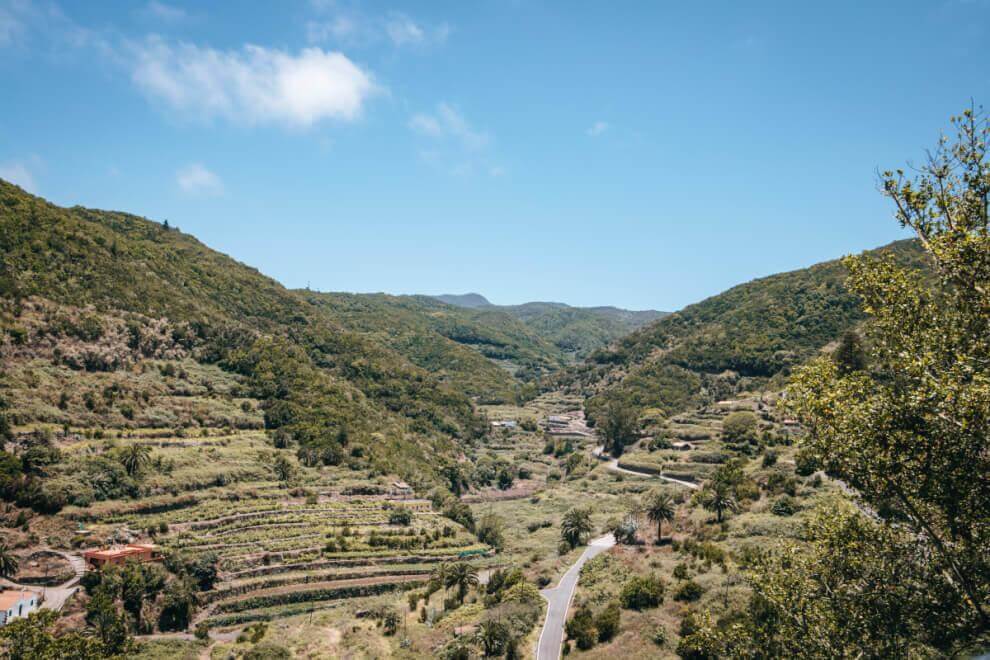
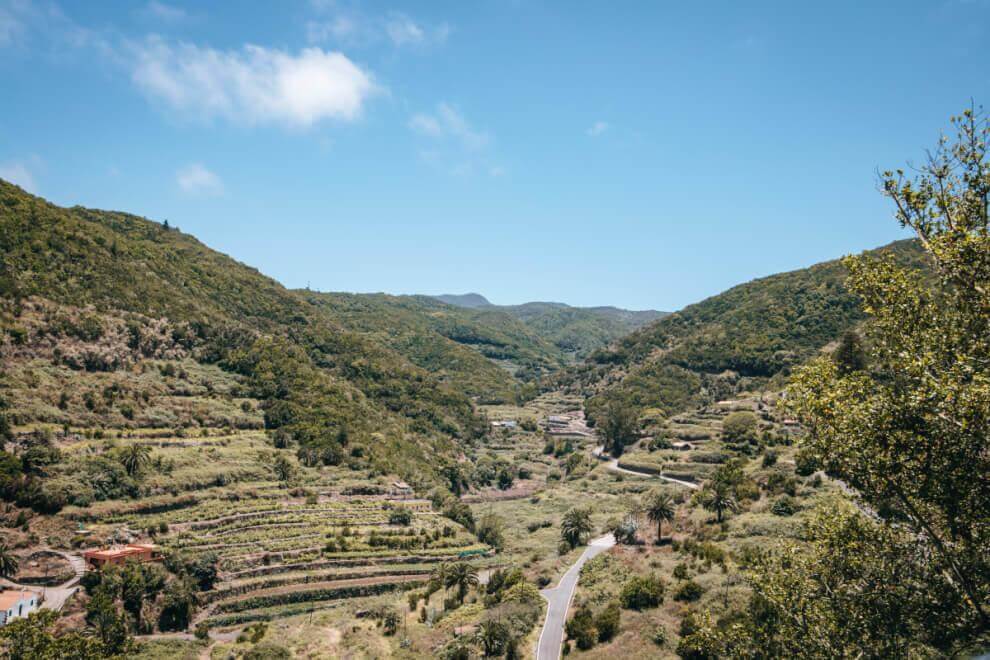
This is a medium-difficulty circular route through the interior north of La Gomera, starting and ending at the Amalahuigue Reservoir, an area surrounded by terraced farmland and humid forests. The itinerary passes through several notable areas of Garajonay National Park and ecological transition zones that showcase the full botanical richness of La Gomera’s monteverde forests. The trail begins at the reservoir, located in an environment of gentle slopes and mixed vegetation, and ascends towards Cruz de Tierno, a natural mountain pass between ravines where old paths converge. From here, the route continues towards Raso del Quebradón, a forested area often shrouded in mist, with the presence of laurel forest, heather, fayas and giant ferns. The route then continues through Serpa, an isolated rural hamlet that preserves traditional buildings nestled among the vegetation, adding significant ethnographic value to the route. It then reaches La Palmita, another small settlement set between ravines, where terraced crops and palm groves define the landscape. From there, the trail continues towards Raso Volteado, a wide forested area combining tracks and footpaths under the shade of the monteverde, ideal for walking at a relaxed pace, birdwatching or enjoying the quiet, humid atmosphere. Finally, the route returns to the Amalahuigue Reservoir, completing a perfect loop to discover the green heart of northern La Gomera. This route is ideal for those seeking a circular forest trail, away from large crowds, offering a perfect balance between nature, rural culture and interpretative hiking.

Estimated time
4 h 25 m
Length
9433
Difficulty
Medium
Route type
Circular

TENERIFE

TENERIFE

GRAN CANARIA

GRAN CANARIA

FUERTEVENTURA

FUERTEVENTURA

LANZAROTE

LANZAROTE

LA GRACIOSA

LA GRACIOSA

LA GOMERA

LA GOMERA

LA PALMA

LA PALMA

EL HIERRO

EL HIERRO
Map of Las Rosas - Raso del Quebradón - Las Rosas
Sustainability
Sostenibilidad
  • Never leave waste of any type lying around, including cigarette butts. Leftover food leads to a proliferation of rats and wild cats, which pose a serious threat to the fauna.
  • Respect the animals. Do not bother them or feed them. If you see an injured specimen, you can call the emergency number: 112. Do not pick flowers or plants.
  • Do not pick up or take away stones or any other item from the natural environment. And do not move them to pile them up into sadly famous 'towers'.
  • Respect the signposting along trails. Leaving the set paths causes damage to the environment and could also be dangerous for you and anyone with you.
  • It is safer to keep your pet on a lead.
  • Try not to alter the peace of the environment with excessive noise (loud music, yelling, etc.).
6
54784
13
262
10045