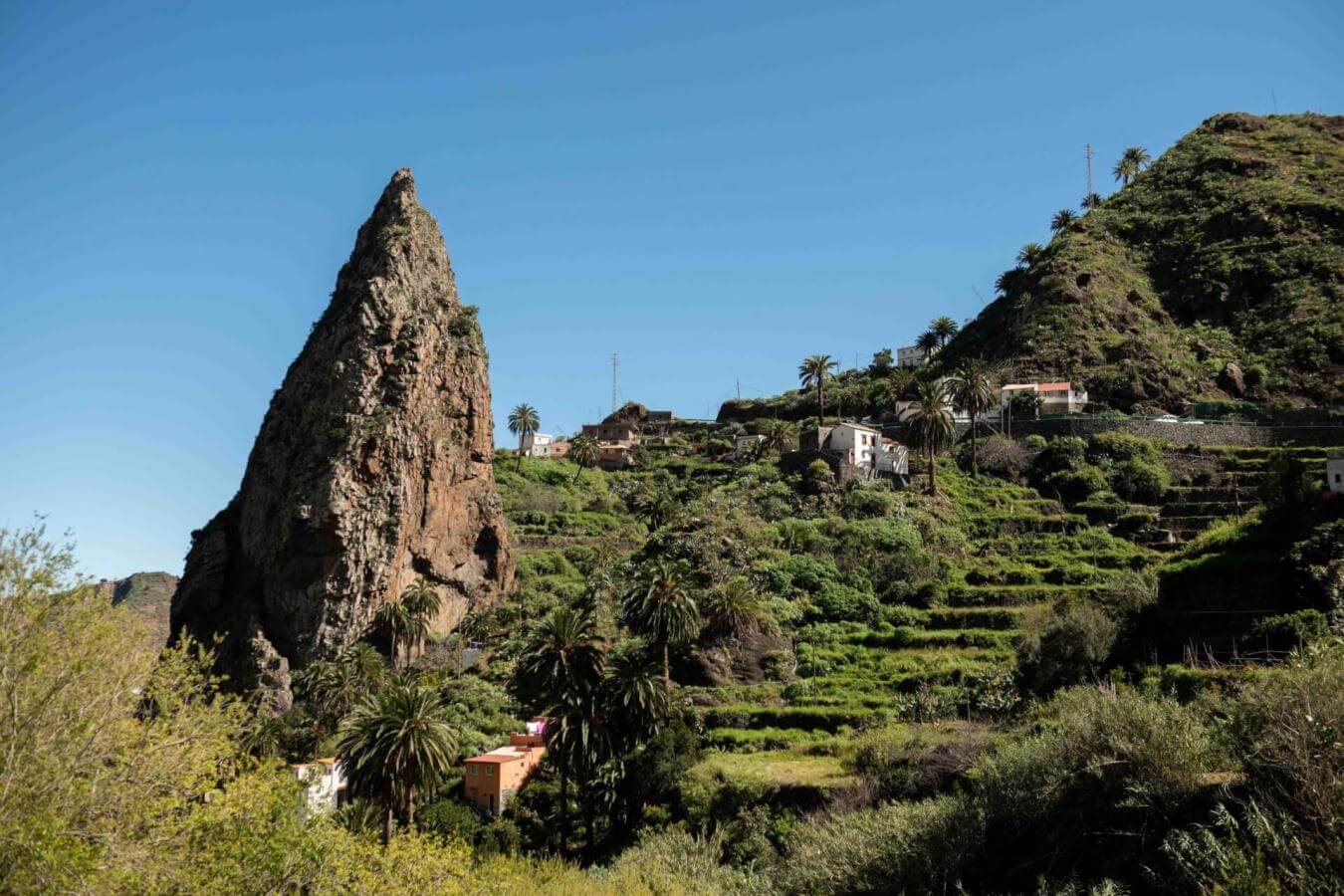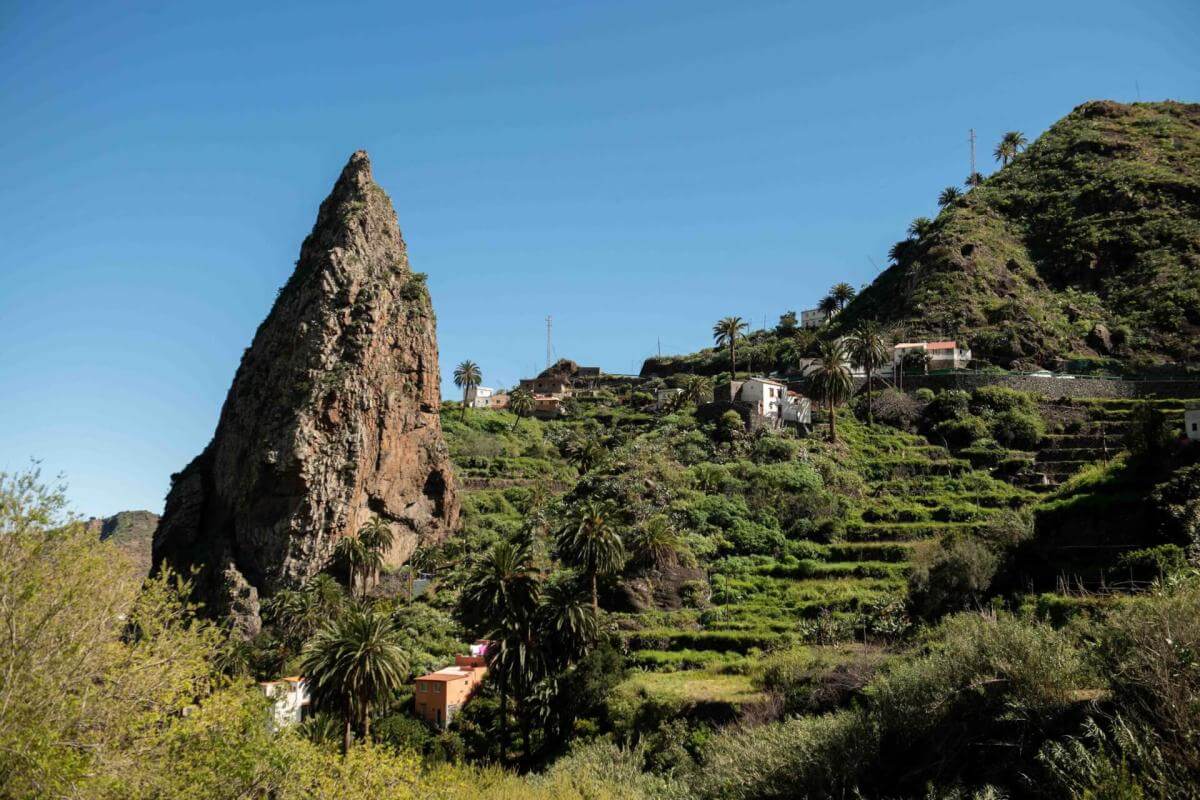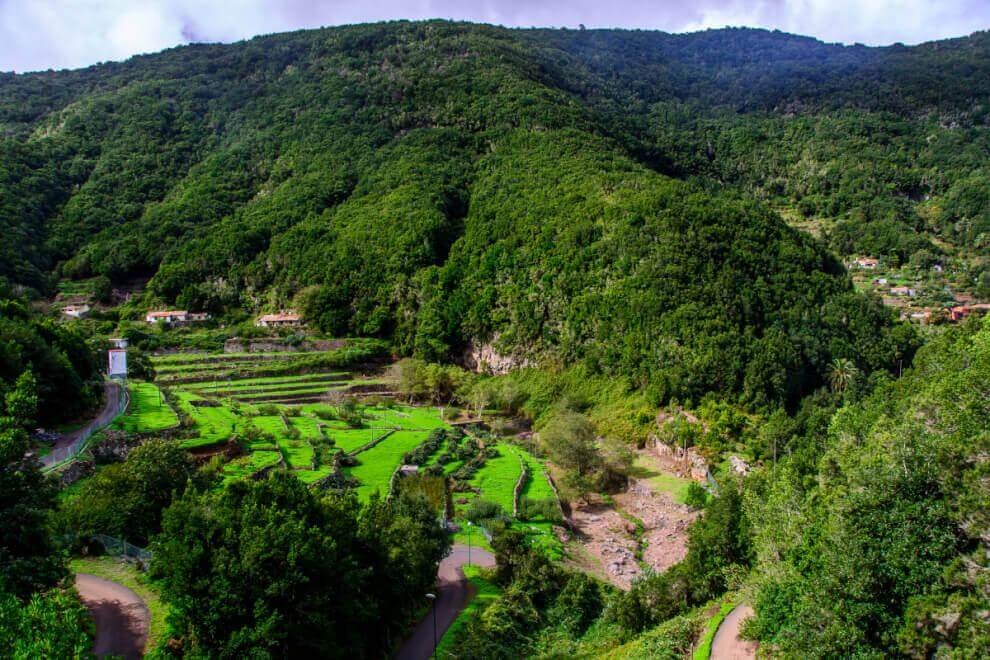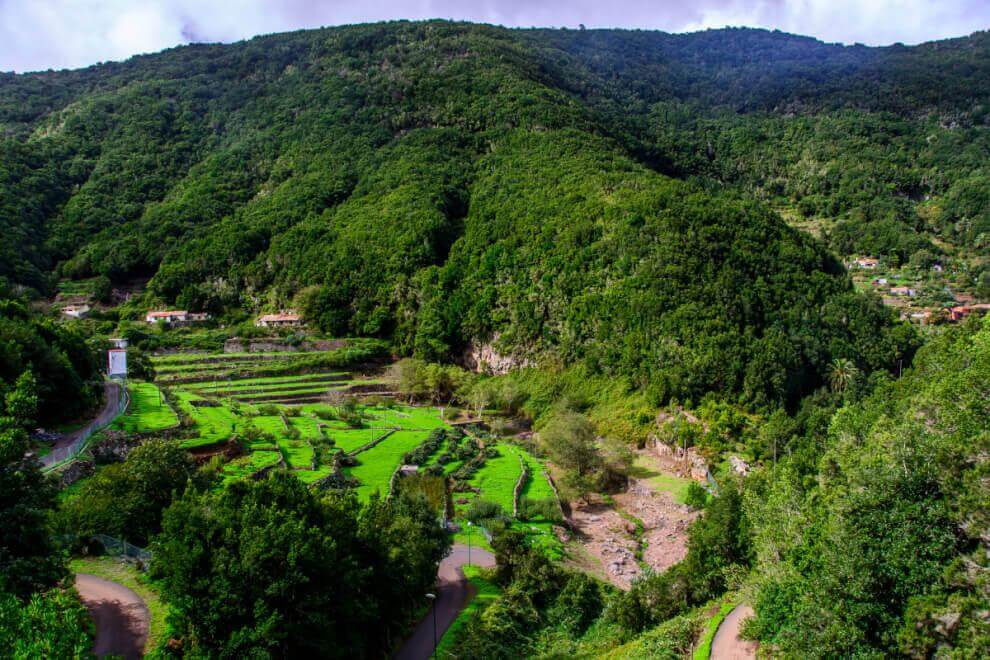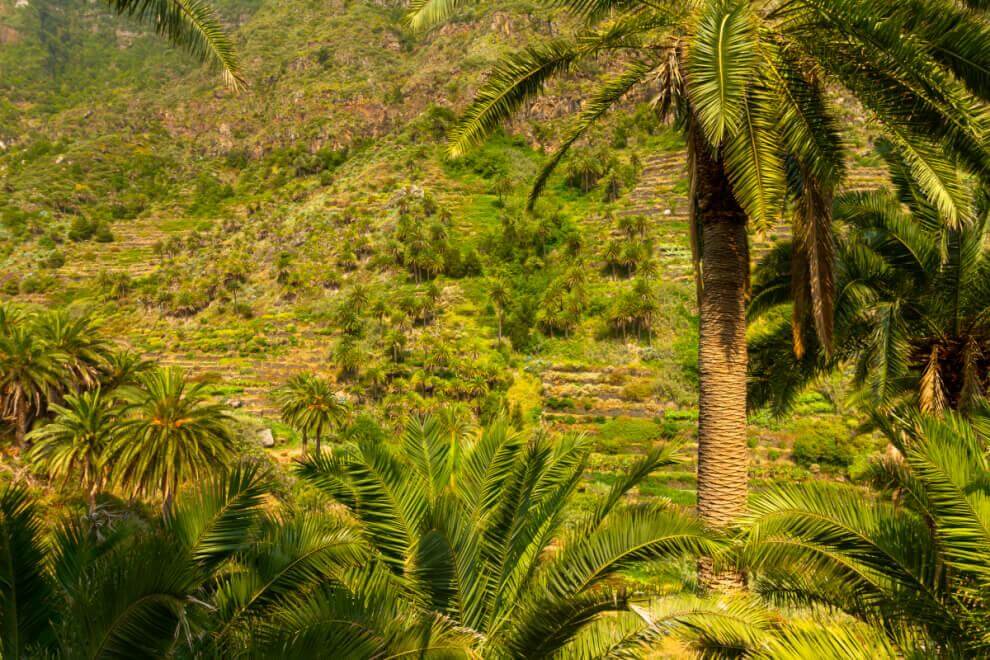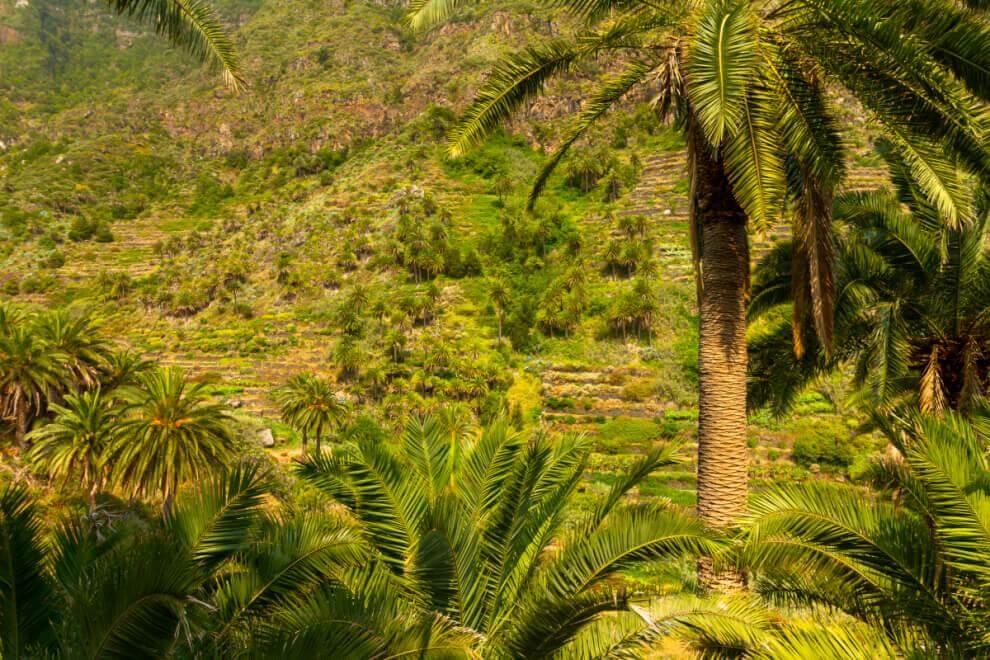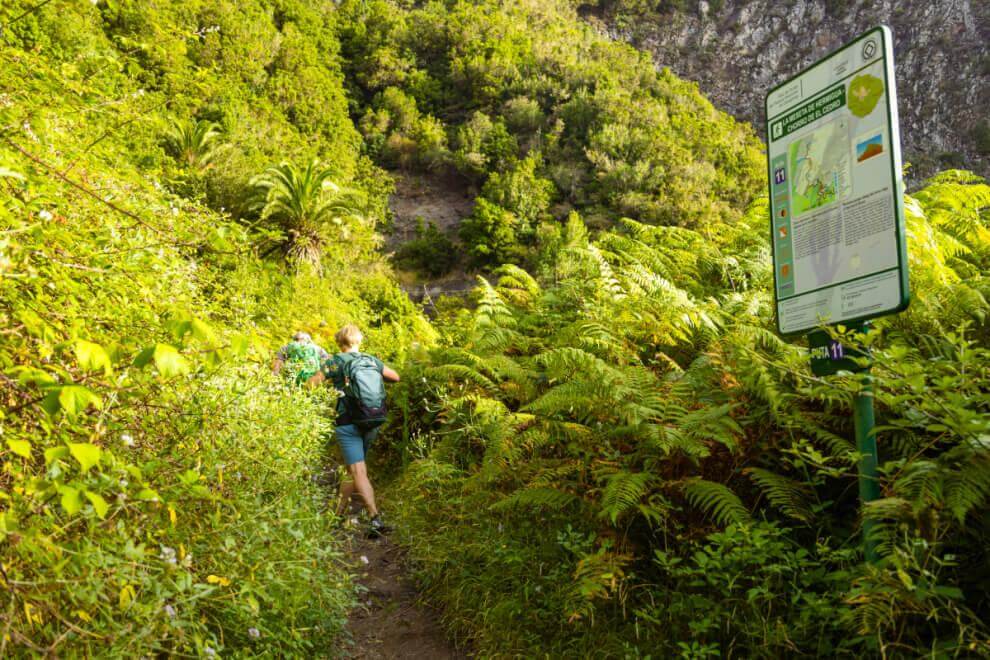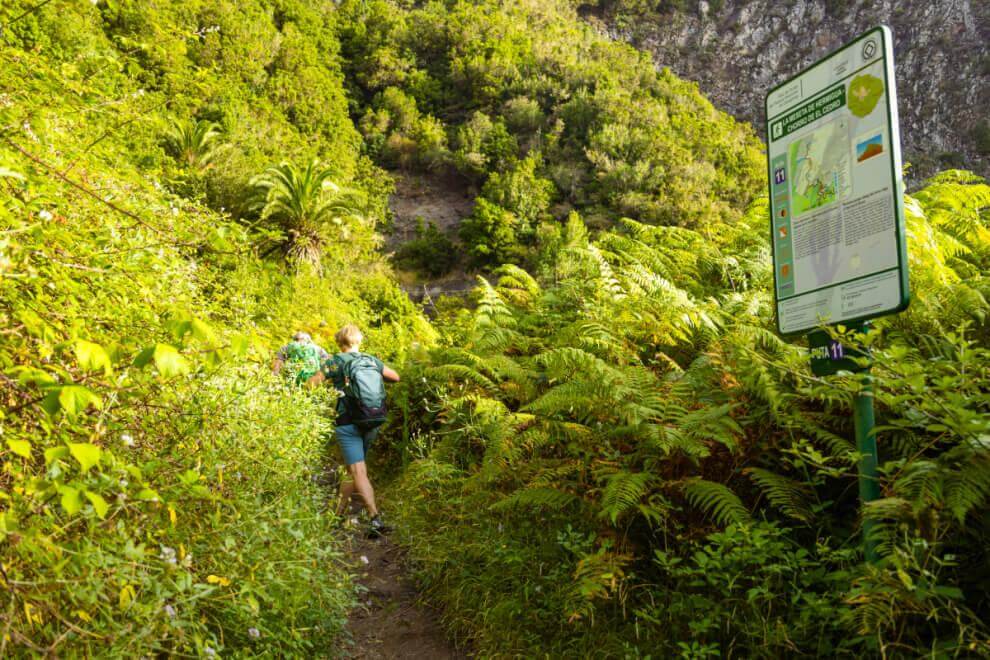



This is a demanding itinerary designed for experienced hikers who wish to explore some of the most varied and fascinating environments of Garajonay National Park. The route combines cultural heritage, humid forests, riparian habitats, and sweeping panoramas, making it one of the most complete trails in the northern sector of the Park. The path descends from the Meseta de Hermigua, where a small heritage feature of special interest can be found: a niche dedicated to Our Lady of Guadalupe, patron saint of La Gomera. This devotional element reflects the deep spiritual connection between the land and its inhabitants and marks the beginning of a route that soon enters highly diverse natural surroundings. The trail allows visitors to observe one of the most important permanent watercourses in the Park, whose banks are lined with willow groves and other riparian vegetation, including species typical of humid environments that find ideal refuge here. Along the way, there are also patches of dry laurel forest with barbusanos, as well as stretches of denser, more luxuriant hillside laurel forest. The scenery becomes particularly spectacular when the trail passes between rocky walls covered in rupicolous vegetation, where ferns, lichens, ivy, and plants adapted to grow in crevices and ledges thrive. These natural rock faces, combined with the constant sound of flowing water, create a landscape of great beauty and high ecological value. After leaving the Park boundary, the route approaches the hamlet of El Cedro, an isolated rural enclave completely surrounded by humid forest. It is located at the bottom of a ravine with water throughout the year and is one of the most distinctive places in the northern part of the island. The area is separated from the Hermigua Valley by an impressive vertical cliff over 200 metres high, from which a spectacular waterfall plunges down, marking the transition between the two ravines. The route also includes an optional variant that passes through the tunnel connecting the Rejo and El Cedro ravines, a historic infrastructure that reflects the human effort to link these steep valleys. The return to the Meseta de Hermigua involves a steady ascent, offering new perspectives of the forest and the geological formations of the area.